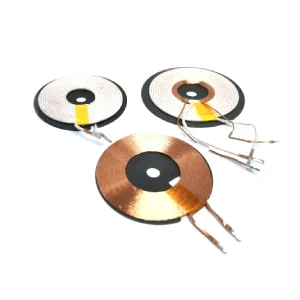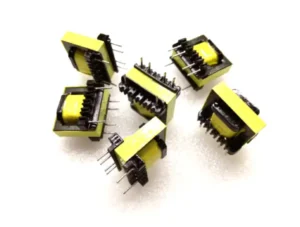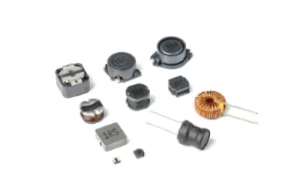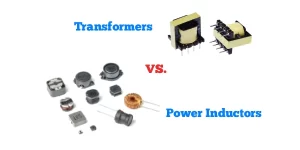
The high-frequency transformer in an inverter is primarily used for voltage conversion and energy transfer. Its core function is to achieve DC-AC conversion, while also offering advantages such as high efficiency and small size. The high-frequency transformer in an inverter achieves voltage conversion through electromagnetic induction, and its operating frequency typically exceeds 10kHz. In an inverter, the high-frequency transformer can reduce size, improve efficiency, and provide electrical isolation between input and output circuits, thereby eliminating the risk of current hazards.
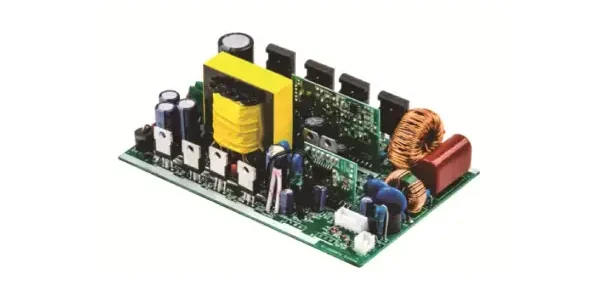
The Core Role of High-Frequency Transformers in Inverter Power Supplies:
The core task of an inverter power supply is to convert direct current (DC) to alternating current (AC). High-frequency transformers play a dual role in this process, performing both energy conversion and voltage conversion. By using high-frequency transformers, system efficiency can be significantly improved, and the size and weight of the equipment can be effectively reduced. Therefore, high-frequency transformers are key to achieving miniaturization and high efficiency.
Compared to traditional power frequency transformers, high-frequency transformers offer higher power density and faster response times, which are crucial for modern photovoltaic inverters, UPS power supplies, and electric vehicle inverter systems. For example, in photovoltaic inverters, high-frequency transformers can accurately regulate voltage, thereby enhancing power generation efficiency. In contrast, UPS power supplies can rapidly switch power sources during outages, ensuring stable operation of equipment.
Why Choose a Custom High-Frequency Inverter Transformer?
In practical applications, general-purpose inverter transformers may not perfectly meet the needs of your equipment. For example, insufficient power may lead to unstable operation, while excessive power will increase costs. Custom transformers can be precisely designed according to the voltage range, frequency, and power characteristics of your equipment, thus ensuring the optimal balance between performance and cost.
The Function of High-Frequency Inverter Power Transformers:
1. Voltage Conversion and Energy Transfer: Utilizing the principle of electromagnetic induction, the input voltage is converted into the required output voltage, while simultaneously achieving efficient energy transfer.
2. Electrical Isolation: Electrical isolation is provided between the primary and secondary coils to ensure circuit safety and prevent high-voltage interference on the low-voltage side.
3. Adaptability to High-Frequency Switching Requirements: Under pulse width modulation (PWM) control, the high-frequency transformer can quickly respond to switching signals, supporting the inverter’s high-frequency operating mode (e.g., above 100kHz).
4. Optimized System Performance: By adjusting the winding turns ratio, different power requirements can be flexibly matched (e.g., power supplies above 200W require a core diameter ≥35mm).
5. Reduced Size and Losses: Employing air-gap or soft magnetic materials, hysteresis losses are reduced while controlling magnetic flux density to prevent magnetic saturation.
When customizing and selecting a high-frequency inverter power supply transformer, what key parameters should be considered? Here are three essential points to keep in mind:
1. Core Material Selection
The core material of a high-frequency inverter power transformer determines its operating efficiency and heat generation. Generally, magnetic materials such as ferrites or nanocrystals are widely used due to their high permeability and low loss characteristics. Selecting an appropriate core material based on the specific application can significantly improve the transformer’s efficiency.
2. Frequency and Power Matching
In high-frequency power supply equipment, the operating frequency and power requirements are key factors determining transformer design. Excessive power margin can lead to core saturation and current losses, while insufficient power can result in decreased efficiency or even equipment failure. Therefore, thoroughly communicating the equipment’s operating frequency and power requirements with the supplier is the first step in customized selection.
3. Heat Dissipation and Insulation Design
High-frequency equipment inevitably generates heat during prolonged operation. Good heat dissipation design can extend the service life of transformers. Furthermore, the selection of the insulation class is equally important, especially for industrial-grade equipment. In high-voltage environments, insulation performance directly affects operational safety.
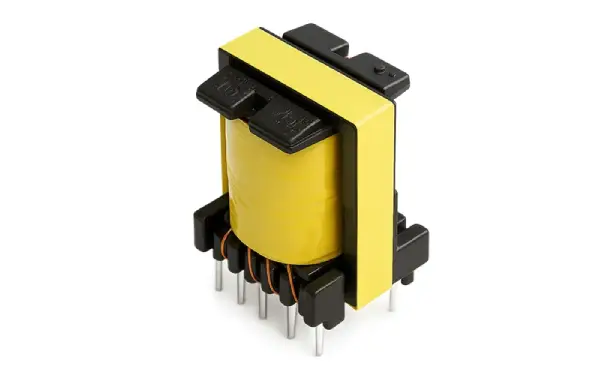
Specific application scenarios and characteristics of high-frequency transformers in inverter power supplies:
1. Voltage Transformation and Isolation
High-frequency transformers use high-frequency switches (such as MOSFETs or IGBTs) for voltage boosting or bucking, for example, boosting 3.7V to 220V or supporting kilowatt-level sinusoidal output. Their high-frequency characteristics (above 10kHz) reduce transformer size, while input-output isolation is achieved through core design, thereby improving safety.
2. Inverter Topology Adaptation
Single-Transistor Self-Excited Oscillation Circuit: A simple inverter built using a high-frequency transformer and transistors, suitable for low-power applications (e.g., LED drivers).
Sine Wave Inverter: Achieves kilowatt-level sine wave output through a high-frequency transformer and phase-splitting control technology, compatible with single-phase two-wire or three-wire power distribution.
Phase-Splitting Output Structure: The new voltage source type high-frequency chain-type micro-inverter uses phase-splitting output, automatically balancing voltage, eliminating the need for an additional transformer, and reducing costs.
3. Process and Performance Optimisation
The manufacture of high-frequency transformers requires precise control of winding density, bushing position, and welding processes to reduce copper losses and hysteresis losses. For example, vertical coils need to be fully compressed to reduce size, while horizontal coils require looser windings to avoid overheating.
4. Typical Application Cases
Low-power application scenario: Disassembling the high-frequency transformer of a power adapter to build a 3.7V to 220V inverter.
High-power application scenario: Utilizing the high-frequency transformer from a discarded circuit board to build a kilowatt-level sine wave inverter.
Novel micro-inverter: A 600W experimental prototype verifies phase-split output and dual-frequency power decoding technology to improve reliability.
How to optimize the performance of high-frequency transformers?
1. Select suitable magnetic materials: Magnetic materials directly affect the efficiency and losses of transformers. For example, ferrite materials are widely used due to their high-frequency characteristics and low-loss performance.
2. Precise winding design: The winding method determines the leakage flux loss and electrical performance of a high-frequency transformer. Optimizing the winding design helps reduce electromagnetic interference and improve conversion efficiency.
3. Optimize the heat dissipation system: Transformers generate a large amount of heat during high-frequency operation. By properly designing the heat sink and improving ventilation, the service life of the equipment can be effectively extended.
Future Development Trends of High-Frequency Inverter Power Transformers
1. High Performance
With the continuous development of power electronics technology, the performance requirements for high-frequency inverter transformers are becoming increasingly stringent. In the future, high-frequency inverter transformers will continue to evolve towards higher performance to meet the needs of various complex application scenarios.
2. Intelligentization
Intelligentization is a significant trend in the future development of power equipment. As a key component of power equipment, the intelligentization level of high-frequency inverter transformers will continue to improve. In the future, high-frequency inverter transformers will possess self-diagnostic and self-repair capabilities, thereby enhancing the reliability and safety of the equipment.
3. Green and Environmentally Friendly
With increasing environmental awareness, green and environmentally friendly practices have become an important trend in the development of power equipment. High-frequency inverter power transformers, as a type of high-efficiency power equipment, continuously reduce energy consumption and environmental impact during use, meeting the requirements of green and environmentally friendly development.
High-frequency inverter power transformers, as advanced power equipment, have broad application prospects in power electronics equipment, industrial automation, and new energy fields. With continuous technological advancements, high-frequency inverter power transformers will continue to develop towards higher performance, greater intelligence, and greater environmental friendliness, providing higher-quality power equipment for related industries and driving the continuous development of power electronics technology.
Selecting a high-frequency transformer requires careful consideration of various factors; every detail significantly impacts the reliability and efficiency of the entire system. When selecting a high-frequency transformer, it is recommended to conduct a comprehensive evaluation of factors such as power, frequency, size, and heat dissipation to avoid common pitfalls. For more product information or application-specific technical support, please contact Zxcompo: sales@ZXcompo.com.