In this era of efficiency and energy conservation, energy conversion equipment not only promotes technological progress but also places higher demands on the performance of components. Inductor, as one of the core components of energy conversion circuits, directly affects the stability and efficiency of the system. Today, let’s unveil the mysteries of the five top power inductors for efficient energy conversion and learn how they perform in different scenarios.
(★ If you want to know more information, you can refer to the following article: Inductors are Used in High Frequency Circuits and Switching Power Supplies)

What is a Power Inductor?
A power inductor is an electronic component used to store energy and manage current. It is widely used in power management, inverters, and electric vehicles. It typically consists of a wire wrapped around a magnetic core. When current flows through it, the wire generates a magnetic field, which stores energy. The main function of a power inductor is to smooth the current, filter out electromagnetic interference (EMI), and improve energy conversion efficiency. In short, a power inductor acts like a “regulator” in a circuit, ensuring a stable current flow and reducing unnecessary energy loss. Power inductors play an indispensable role in switching power supplies, LED drivers, and smart hardware.
Five Power Inductors for More Efficient Energy Conversion
1. Ferrite Inductors
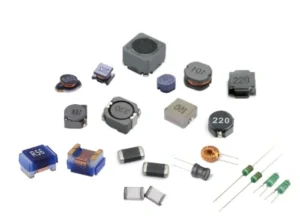
Ferrite inductors are electronic components consisting of a ferrite material and a coil. They store electrical energy and suppress high-frequency noise, making them indispensable components in modern electronic devices. Ferrite is a ceramic material composed of a mixture of iron oxide and other metal oxides. Due to its excellent magnetic permeability and low high-frequency loss, this material is particularly suitable for high-frequency switching power supplies and DC-DC converters. Their low power loss makes them a popular choice in the green energy sector.
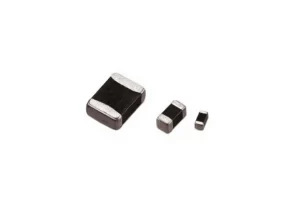
2. Chip Inductors
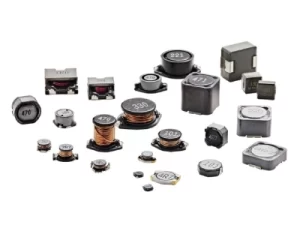
Chip inductors, also known as SMD inductors (surface mount device inductors), are inductors designed specifically for surface mount technology. Their primary function is to store energy in a circuit, suppress electromagnetic interference, or act as a filter. Chip inductors are typically characterized by their small size, high performance, and ease of soldering. Their low heat generation design is suitable for high-density circuit boards and is widely used in electronic devices such as mobile phones, computers, and smart homes.

3. Powdered Iron Core Inductors
Powdered iron core inductors are renowned for their low hysteresis losses and high current-carrying capacity, making them an ideal choice for high-power data centers and industrial equipment. Their core characteristic lies in their use of “iron powder” as the magnetic material. Compared to traditional ferrites, powdered iron core inductors offer higher magnetic flux density and greater resistance to saturation. In circuits, powdered iron core inductors are primarily used for energy storage, filtering, and current stabilization. They are widely used in switching power supplies, inverters, and audio equipment.
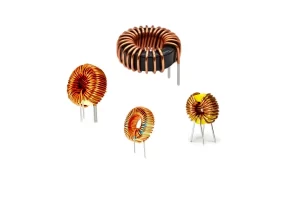
4. Power Toroidal Inductors
The unique design of power toroidal inductors enhances their anti-interference capabilities, making them particularly suitable for applications requiring extremely high stability, such as electric vehicles and solar inverters. The toroidal design reduces electromagnetic interference and improves the inductor’s efficiency. Power toroidal inductors play a vital role in current regulation in electronic devices. They store and release electrical energy, helping to stabilize voltage and reduce energy loss, making them an indispensable component in modern electronic circuits.
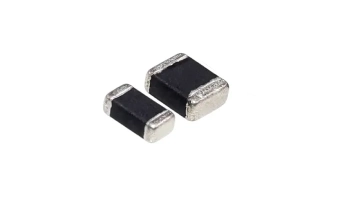
5. Multilayer Ceramic Inductors
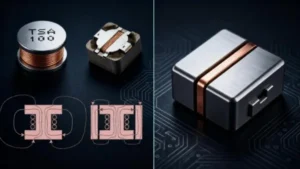
Multilayer ceramic inductors are small electronic components made by alternately stacking and sintering multiple layers of ceramic material and metal electrodes. Their primary function is to control current through inductive impedance, thereby achieving signal filtering, decoupling, and energy storage. Compared to traditional inductors, multilayer ceramic inductors offer advantages such as small size, stable performance, and excellent high-frequency characteristics. With their superior high-frequency performance and electromagnetic interference resistance, multilayer ceramic inductors provide a strong foundation for 5G base stations and IoT devices.
Which Power Inductors Will Lead This Technological Revolution in the Next Five Years?
As the world enters a new era of sustainable development, energy efficiency has become a hot topic of intense concern. High-efficiency energy conversion technology is poised for a revolution by 2025, and power inductors, a core component of this revolution, are poised for a technological breakthrough comparable to a revolution.
1. High-Frequency Power Inductors
High-frequency power inductors demonstrate unparalleled advantages in the field of new energy electric vehicle charging. Compared to traditional low-frequency devices, high-frequency power inductors significantly improve charging efficiency while reducing energy loss. Industry experts predict that by 2025, high-frequency power inductors will become standard equipment in fast-charging stations.
2. Ultra-Low-Loss Inductors
Imagine how solar energy storage systems could utilize more efficient inductors to reduce losses. Ultra-low-loss inductors made from new materials not only significantly improve energy conversion efficiency but also play a key role in humanity’s pursuit of clean energy, contributing to a green future.
3. Micro Inductors
The rapid development of 5G and the Internet of Things has driven demand for miniaturized, high-performance inductors. Micro power inductors, with their compact size and high performance, have become a new favorite among smart device manufacturers.
4. High-Temperature Power Inductors
Facing the demands of extreme environments, high-temperature power inductors have become a key technology in aerospace and industrial equipment. It maintains stability while withstanding extreme physical conditions, making demanding industrial applications more reliable.
5. Adaptive Power Inductor
Finally, it’s worth mentioning the adaptive power inductor, which intelligently adapts to different application scenarios. Whether in consumer electronics or industrial equipment, it demonstrates great flexibility and wide applicability.
The "Secret Weapon" for Efficient Energy Conversion
Power inductors play an irreplaceable role in power management and energy transmission. Their primary function is to efficiently transfer electrical energy from one device to another while minimizing energy loss. Selecting high-quality power inductors not only improves device performance but also significantly reduces business operating costs.
1. Type A: The Optimal Solution for High-Frequency Applications
This inductor is designed specifically for high-frequency circuits, effectively reducing electromagnetic interference. Its high conversion efficiency is highly sought after by engineers and widely used in communications equipment and new energy vehicle systems.
2. Type B: The Energy Pillar of the Smart Home
With its extremely low power consumption, this power inductor is ideal as a core component in smart home devices, contributing to a more energy-efficient and intelligent lifestyle.
3. Type C: The Performance Choice for Industrial Equipment
This inductor is designed specifically for high-frequency circuits, effectively reducing electromagnetic interference. Its high conversion efficiency is highly sought after by engineers and widely used in communications equipment and new energy vehicle systems.
4. Type D: An Energy-Saving Partner for Portable Devices
With the growing popularity of portable devices, this compact, high-performance power inductor has become the preferred choice for handheld devices, particularly smartphones and tablets.
5. Type E: A Star in the New Energy Industry
Power inductors are in high demand in applications such as new energy vehicles and grid energy storage. With their excellent temperature adaptability and extremely low energy loss, these inductors make a significant contribution to the new energy industry.
Choosing the Right Power Inductor
When selecting a power inductor, in addition to considering its technical specifications, it’s also important to consider the specific application scenario. For businesses, choosing the right inductor not only saves costs but also improves the overall competitiveness of their equipment.
How to Choose the Right Power Inductor?
When selecting a power inductor, consider the following key parameters: frequency range, inductance, saturation current, and loss characteristics. Choosing the appropriate inductor type for different application scenarios can effectively improve energy conversion efficiency.
1. Inductance (L)
The inductance value should be determined based on the actual circuit requirements. Excessively high inductance values will result in slow circuit response, while too low inductance values may not effectively suppress current fluctuations. Generally, you can determine the most suitable range based on the required operating frequency and ripple current.
2. Saturation Current
Saturation current is another key parameter for power inductors. Power inductors must maintain normal operation at the maximum current of the circuit and must not experience performance degradation due to core saturation. It is an absolute rule to ensure that the saturation current value is greater than the maximum current in the circuit.
3. Power Loss and Heat Dissipation
Power inductors generate a certain amount of heat during operation. Choosing low-loss inductor materials and a more efficient heat dissipation solution can ensure more stable operation. Also, pay attention to the inductor’s Q (quality factor). The higher the Q, the lower the inductor’s power loss.
Tip: How to balance performance and cost?
Many people make a trade-off between performance and cost when choosing an inductor. It’s recommended to prioritize brand quality and precise parameter compatibility to avoid sabotaging your entire design by choosing inferior products for the sake of cheapness.
Why Power Inductor Selection Impacts the Future
The choice of a power inductor not only affects device efficiency but also determines product performance. With the rapid development of emerging technologies such as 5G, the Internet of Things (IoT), electric vehicles, and wearable devices, the requirements for power inductors are increasing.
For example, in electric vehicles, high-efficiency power inductors can reduce energy loss and extend driving range; in smartphones, they help extend battery life and minimize device heat. These demands are driving rapid iterations in power inductor technology, and companies face increasingly complex considerations when selecting power inductors, including current-carrying capacity, frequency response, size, and materials.
Improper power inductor selection can lead to numerous problems. For example, an inductor that is too small can overheat and burn out due to insufficient current handling capacity; an inductor that is too large can increase circuit size and affect device portability. Furthermore, the use of unsuitable materials can lead to high inductor losses at high frequencies, thereby reducing circuit efficiency.
If companies ignore the importance of power inductors in the early stages of product development, the performance of subsequent products may be affected, and they may even lose market share. Therefore, selecting the right power inductor is not just a technical issue; it also impacts a product’s market positioning and future development.
With continuous technological advancements, the application of new nanomaterials and advanced manufacturing processes has made power inductors more efficient, compact, and environmentally friendly. For example, improvements in ferrite materials and the widespread adoption of multilayer inductor technology are driving power inductors toward higher frequencies, higher efficiency, and smaller sizes. These trends mean that future electronic products will be thinner, lighter, and more efficient, placing higher demands on the selection of power inductors.

Shenzhen Zhenhua has over 20 years of experience in the inductor industry, with products widely used in automotive, telecommunications, consumer electronics, and other fields. Each product is meticulously designed to enhance performance, maximize signal and power efficiency, and conserve space. Shenzhen Zhenhua’s global technical team is widely recognized for its ability to design, manufacture, and deliver high-quality, high-performance signal integrity and noise filtering solutions. We offer worldwide shipping. For samples, please contact us at info@smdinductor.com.