In modern electronic devices, the performance of the power supply system is critical to the reliability and stability of the equipment. However, within these systems, a tiny component—the ferrite bead—plays a vital role.
What Are Ferrite Beads?
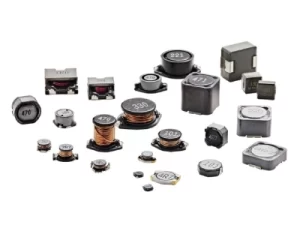
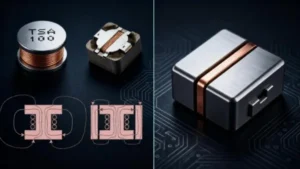
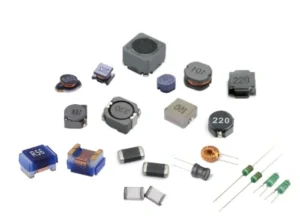
Ferrite beads are small electronic components made of ferrite materials, typically used to suppress high-frequency noise interference. Its operating principle is similar to that of a “filter” for high-frequency signals, effectively reducing EMI (Electromagnetic Interference) within a circuit. This not only enhances the performance of power supply systems but also provides a cleaner, more stable operating environment for electronic devices.
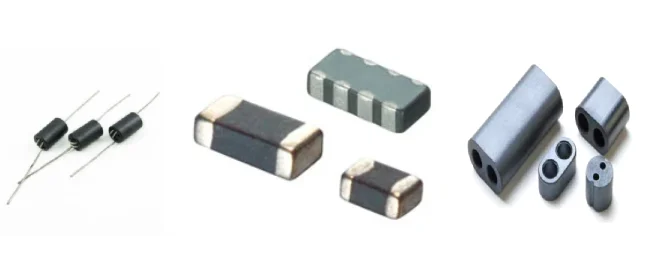
Why Are Ferrite Beads Indispensable in Power Supply Systems?
Power supply systems usually generate a variety of complex electromagnetic signals. Without appropriate interference suppression measures, the system may experience frequent malfunctions—and could even suffer a reduction in its expected service life. Thanks to their exceptional high-frequency attenuation capabilities, ferrite beads have become an indispensable component in power supply system design. Their primary functions include:
1. **Suppressing High-Frequency Noise:** By absorbing high-frequency currents within the circuit, they effectively shield the system from the impact of external electromagnetic interference.
2. **Enhancing Signal Quality:** They mitigate the interference caused by high-frequency noise during data transmission, thereby ensuring signal stability.
3. **Reducing Circuit Radiation:** They minimize the electromagnetic radiation emitted by the power supply system into the surrounding environment, ensuring that the system complies with relevant environmental standards.
An effective method for efficiently filtering out high-frequency power supply noise—thereby enabling the clean sharing of power rails (particularly the analog and digital power rails within mixed-signal integrated circuits) while simultaneously maintaining high-frequency isolation between these shared rails—is the use of ferrite beads.
A ferrite bead is a passive component that filters high-frequency noise across a wide frequency range. Within the target frequency range, it exhibits resistive characteristics and dissipates noise energy in the form of heat. Ferrite beads are typically connected in series with power rails, while capacitors are usually connected between the terminals of the bead and ground. This configuration forms a low-pass filter network capable of further reducing high-frequency noise within the power supply.
However, improper application of ferrite beads in system design can lead to adverse consequences. Typical examples include the potential for interference resonance to occur when ferrite beads are paired with decoupling capacitors for low-pass filtering; furthermore, since the performance of ferrite beads is susceptible to the influence of DC bias currents, their electromagnetic interference (EMI) suppression capabilities may consequently be compromised. Only by correctly understanding and comprehensively evaluating the characteristics of ferrite beads can one effectively avoid these issues.
Next, we will explore the key considerations for system designers when incorporating ferrite beads into power systems—specifically, their impedance-frequency characteristics under varying DC bias currents, as well as the potential risk of interference with LC resonance effects. Finally, to address the aforementioned resonance interference issues, this paper introduces damping techniques and presents a comparative analysis of the effectiveness of various damping methods.
The device used to demonstrate the function of ferrite beads as output filters is a 2 A/1.2 A DC-DC switching regulator (ADP5071) featuring independent positive and negative outputs. The ferrite beads utilized in this article primarily employ surface-mount packaging.
Simplified Model and Simulation of Ferrite Beads
A ferrite bead can be modeled as a simplified circuit consisting of a resistor, an inductor, and a capacitor, as shown in Figure a. RDC corresponds to the DC resistance of the bead. CPAR, LBEAD, and RAC represent, respectively, the parasitic capacitance, the bead inductance, and the AC resistance associated with the bead (i.e., AC core loss).
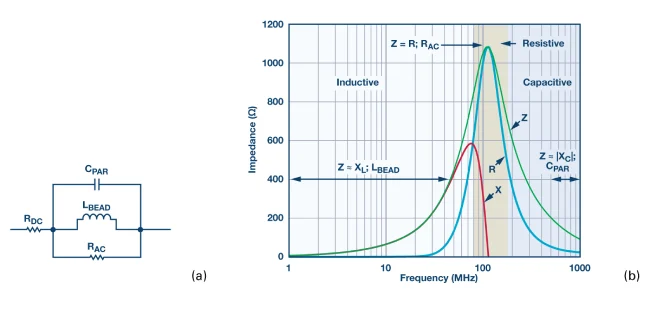
Ferrite beads can be classified based on their three response regions: the inductive region, the resistive region, and the capacitive region. These regions can be identified by observing the ZRX curve (as shown in Figure b), where Z represents impedance, R represents resistance, and X represents the bead’s reactance. To attenuate high-frequency noise, the bead must operate within the resistive region; this is crucial, particularly in electromagnetic interference (EMI) filtering applications.
In this mode, the component acts as a resistor, effectively blocking high-frequency noise and dissipating it in the form of heat. The resistive region begins at the bead’s crossover frequency (the point where X = R) and extends to the critical point where the bead transitions to a capacitive state. The frequency corresponding to this capacitive transition point is the frequency at which the absolute value of the capacitive reactance (–X) is exactly equal to R.
Tips for Using Ferrite Beads
Although ferrite beads may appear simple, several key points require attention during practical application:
1. Precise Selection: The appropriate ferrite bead should be selected based on the circuit’s operating frequency and current requirements. Excessively high impedance can lead to signal distortion, while insufficient impedance will prevent the bead from providing its intended suppression effect.
2. Strategic Placement: Generally, placing the ferrite bead in proximity to the noise source allows for more effective interference suppression.
3. Integration with Other Anti-Interference Measures: Combining ferrite beads with components such as bypass capacitors and filters can further optimize the overall performance of the power supply system.
Have you selected the right ferrite beads for your power supply system?
After reading this article, you likely have a profound appreciation for the importance of ferrite beads. So, is your power supply system utilizing them correctly? We cordially invite you to share your experiences or the challenges you are currently facing; let’s explore solutions together to help boost the performance of your equipment!
Let us work hand in hand to create a more efficient and stable operating environment for electronic devices—starting with the details to comprehensively enhance the reliability of your power supply systems.