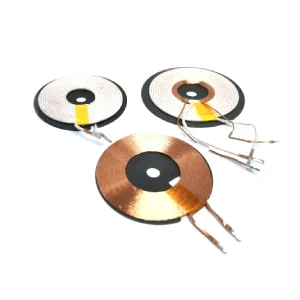
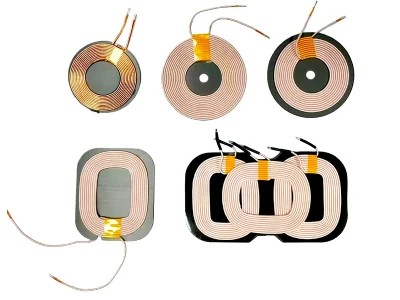
The wireless power supply coil is the core component of a wireless charger, enabling contactless power transfer from the transmitter to the receiver through electromagnetic induction. Its core function is to convert alternating current (AC) into an alternating magnetic field, which is then converted back into electrical energy by the receiving coil to charge digital devices such as mobile phones and headphones. These coils typically use a fixed inductance, operate at around 100kHz, and have an allowable error of ±10% to ensure stable and efficient energy transfer.
I. Technical Principles and Structural Design:
The core principle of the wireless power supply coil is based on Faraday’s law of electromagnetic induction. When an alternating current is passed through the transmitting coil, an alternating magnetic field is generated; when the receiving coil is placed in this magnetic field, an electromotive force is induced, and a current is generated. To improve transmission efficiency, the coil typically adopts a single-layer, tightly wound structure, reducing magnetic field leakage through closely spaced wires. Its package type is DIP (Dual In-line Package), which facilitates mounting and soldering on a circuit board. The fixed inductance value simplifies the circuit tuning process, while the 100kHz operating frequency balances transmission distance and energy consumption—too high a frequency leads to increased energy loss, while too low a frequency affects charging speed.
II. Application Scenarios and Compatibility:
This coil is mainly used in Qi-compliant wireless chargers and is compatible with portable devices such as mobile phones and smartwatches. Its design must be strictly matched with the parameters of the receiving end. For example, the inductance value error must be controlled within ±10%, otherwise it may lead to insufficient magnetic field strength or overheating problems. In multi-device compatibility scenarios, the coil also needs to be adjusted by changing the number of winding turns or wire diameter to optimize the transmission efficiency under different power requirements. For example, when charging high-power devices, the magnetic field strength can be increased by increasing the number of coil turns, but the operating frequency must be adjusted simultaneously to avoid energy loss.
III. Technical Highlights and Practical Performance:
Compared to traditional wired charging, the advantage of wireless power supply coils lies in the convenience of contactless transmission. Its single-layer tightly wound structure not only reduces the volume, but also reduces high-frequency loss by reducing the parasitic capacitance between the conductors. In terms of safety, the DIP packaging and fixed inductance design simplify circuit protection mechanisms—for example, by limiting the operating frequency range, excessively strong magnetic fields can be prevented from interfering with the human body or devices. In actual testing, the coil can maintain an energy conversion efficiency of over 80% within a 10mm transmission distance, meeting daily charging needs.
IV. Precautions for Use:
During installation, ensure the coil is parallel to the circuit board to avoid uneven magnetic field distribution caused by tilting. The soldering temperature must be controlled below 260℃ to prevent deformation of the encapsulation material. During use, avoid bringing metal objects close to the coil; otherwise, it may cause magnetic field distortion or local overheating. Furthermore, for long-term high-load operation, a heat dissipation design is necessary, such as adding a thermal pad or ventilation holes to the back of the circuit board.
iPhone 12 Wireless Charging Coil Location
With the advancement of technology, wireless charging is gradually permeating all aspects of our lives. Apple introduced the new MagSafe magnetic wireless charging technology in its iPhone 12 series, released in 2020. This innovation not only enhances the user experience but also redefines how wireless charging works. We will delve into the location and working principle of the iPhone 12 wireless charging coil to help users better understand and use this advanced technology.
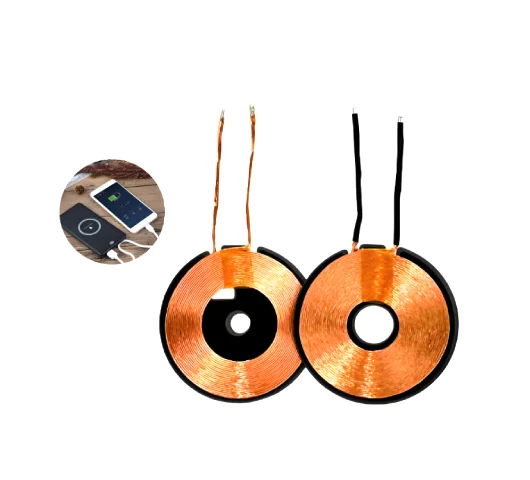
MagSafe is Apple’s magnetic wireless charging technology. It uses magnets built into the back of the phone and charger to ensure precise alignment. This design not only maximizes charging efficiency but also provides a more stable charging experience. Unlike traditional wireless charging, MagSafe uses magnetic attraction to solve the common problems of misalignment and low charging efficiency in traditional wireless charging. Specifically, the working principle of MagSafe technology is not complicated. A ring of strong magnets on the back of the phone helps it adhere to the wireless charging pad, resulting in a more stable and efficient charging effect. Simply put, when you place your iPhone 12 on a MagSafe charger, you’ll hear a “click.” This is because the magnetic force firmly connects the charger and the phone together, allowing for stable charging.
The biggest advantage of this magnetic wireless charging lies in its precise positioning capability. Traditional wireless charging often suffers from low charging efficiency or even fails to charge due to the inability to secure the phone in place. MagnSafe utilizes magnetic attraction to maintain the optimal position between the phone and charger. Even slight deviations will not trigger a charger response, eliminating the need for users to readjust the phone’s angle and realign it. In addition to improved charging efficiency and stability, MagSafe also supports higher-power wireless fast charging. Compared to the previous 7.5W wireless charging, MagSafe supports up to 15W fast charging, significantly reducing charging time. This means users can fully charge their phones in a shorter time, greatly enhancing charging convenience.
For ordinary users, understanding how MagSafe works will allow them to better utilize this technology. The main circuit of the MagSafe charger consists of two parts: the USB Type-C connector unit circuit and the coil transmitter unit circuit. Whether it’s the wire end or the transmitter part, as long as the traditional transmitter coil is replaced, the magnetic wireless charging function can be achieved, while ensuring compatibility with the magnetic wireless charging needs of all iPhone 12 models.
While MagSafe technology offers many benefits, there are a few things to keep in mind. Because it relies on magnetic attraction, strong magnetic fields should be avoided when using the MagSafe charger to prevent affecting the charging performance. Furthermore, the MagSafe charger is currently only compatible with the iPhone 12 series and later models; it is not yet supported by other devices.
The MagSafe magnetic wireless charging technology introduced in the iPhone 12 series is a major innovation. It not only improves charging efficiency and stability but also simplifies the operation process, bringing great convenience to users. By gaining a deeper understanding of the principles and precautions for using this technology, users can better enjoy the convenience that technology brings to their lives.
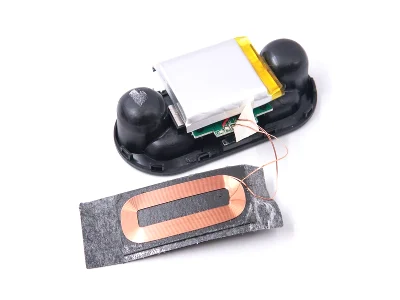
Wireless Charging Coil Location for Earphones
The convenience of wireless headphones has made them an important tool in modern life, but have you ever encountered problems such as unstable wireless charging or slow charging speed? All of this may be closely related to the location of the wireless charging coil in the headphones. If you’re often confused or want to know how to optimize your wireless earphone charging experience, then keep reading!
Why is the Placement of the Wireless Charging Coil So Important?
Wireless charging technology works by utilizing electromagnetic induction. The electromagnetic waves emitted by the charger interact with the charging coil inside the earphones, thereby enabling the transfer of electrical energy. If the charging coil of the headphones is not aligned with the electromagnetic field of the charger, the charging efficiency will be reduced, or it may even fail to charge. In short, wireless charging is not magic, but science, and science is all about precision.
How to Locate the Charging Coil in Wireless Earbuds?
To optimize the charging experience, you first need to understand the specific location of the earbud charging coil. Typically, the coil is located on the bottom or back of the earbuds or charging case. If you are using headphones from a well-known brand, such as AirPods Pro or Galaxy Buds, the manufacturer will usually clearly indicate the location of the coil in the instruction manual. If there is no explicit label, you can try the following methods:
1. Observe the charging indicator light: Place the earbuds or charging case on the charging pad and gently move it until the indicator light illuminates. This usually indicates that the coils are correctly aligned.
2. Use auxiliary tools: Some brands of charging pads have a built-in magnetic guidance function, which can help the headphones find the best alignment position.
3. Check official information: If you have any questions, you can visit the official website of the headphone brand for more details.
How to Optimize Your Wireless Charging Experience?
Besides locating the coil correctly, the following tips can also improve your wireless charging efficiency:
1. Choose a high-quality wireless charging pad: High-quality charging equipment can not only improve charging speed, but also better match different brands of headphones.
2. Keep the charging pad surface clean: Dust or impurities can interfere with charging efficiency.
3. Avoid heavy protective cases: Some headphone cases may obstruct electromagnetic fields, causing charging failure.
In summary, wireless charging coils, with their unique advantages, have demonstrated immense application potential in numerous fields, bringing unprecedented convenience to our lives and work. With the continuous advancement of technology, it is believed that its application scenarios will continue to expand and deepen, creating a more intelligent and convenient future for us.
Zhenhua now offers wireless charging coils and other related products. We support customization, provide vertical sealed mounting solutions, and offer fast delivery services. For any inquiries, please contact us at info@smdinductor.com! We will provide you with the best solution.