2026 Inductor Industry Trends: Miniaturization, high-frequency performance, and integration are reshaping the global passive component market. By mid-2026, inductors, long considered “components” on circuit boards, are undergoing the most transformative technological shift of the past decade. Driven by surging demand in sectors such as new energy vehicles, AI computing infrastructure, and 5G-Advanced communications, the global inductor market is moving away from an era dominated by low margins and price competition toward a new phase of technology-driven growth characterized by high barriers to entry; three key trends are spearheading this industry transformation.
(★ If you want to know more information, you can refer to the following article: •Inductors are Used in High Frequency Circuits and Switching Power Supplies)
Global Market Overview
In 2025, the global inductor market is valued at approximately $71.22 billion, with Chinese manufacturers accounting for over 40% of total global production volume. The market is projected to reach $107 billion by 2032, growing at a compound annual growth rate (CAGR) of 6.1%.
Unlike the past few decades where consumer electronics dominated industry growth, in 2026 more than 60% of new demand will come from three high-value verticals: electric vehicles (EVs), AI data centers, and next-generation 5G communications. This structural shift is fundamentally reshaping the industry’s growth drivers, pivoting the focus from the mass production of smartphones toward high-performance applications such as EV powertrains and power systems for AI servers.
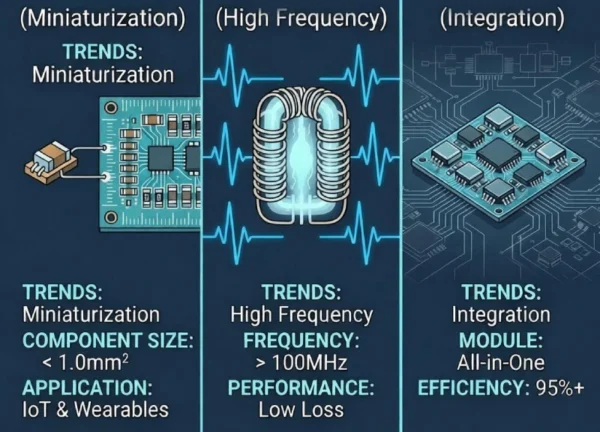
1. Miniaturization: Mass Production of Inductors Smaller Than a Sesame Seed
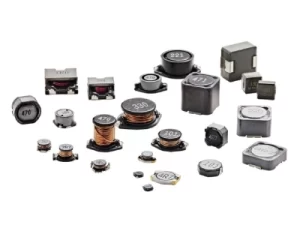
The trend toward miniaturization began with high-end consumer electronics and has now become an industry-wide standard; sizes as small as 01005 (0.4 × 0.2 mm) are commonplace. Inductors smaller than a sesame seed have become standard components in flagship smartphones and TWS (True Wireless Stereo) earbuds.
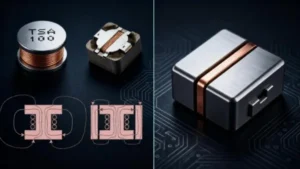
The real technological breakthrough in 2026 lies not only in size reduction but also in maintaining excellent electrical performance while reducing size: thanks to the widespread application of molded inductor technology, modern miniaturized inductors can provide rated current and inductance stability comparable to the previous generation of larger 0402 specification products. This process uses high-pressure molding to encapsulate the entire copper coil within high-density magnetic powder. It eliminates issues with loose coils found in traditional hand-wound inductors while achieving a thickness of less than 1 mm and near-perfect consistency.
The global molded inductor market is projected to double in size, growing from $1.28 billion in 2025 to over $2.5 billion by 2032. Leading manufacturers are actively expanding production capacity to meet the surging demand from compact wearable devices and high-density automotive ECUs (Electronic Control Units).
2. High-Frequency Operation: Technological Breakthroughs Driven by New Magnetic Materials
Two major global technological trends are driving the continuous rise in operating frequencies: wide-bandgap semiconductors (SiC and GaN) and 5G millimeter-wave communication. These technologies are pushing power switching frequencies from the tens of kilohertz (kHz) range to the megahertz (MHz) range. This poses a significant challenge for traditional ferrite-core inductors, as their efficiency losses increase exponentially at high frequencies.
By 2026, nanocrystalline and amorphous alloy cores will have transitioned from R&D laboratories to mass production lines; compared to traditional ferrite materials, these new materials reduce high-frequency core losses by more than 60%. Semiconductor giants such as TDK and Infineon have launched and mass-produced SiC power modules with integrated nanocrystalline inductors, enabling switching frequencies exceeding 100 kHz in electric vehicle (EV) traction inverters and solar power systems.
In the realm of RF inductors, 2026 marks the point where an operating frequency of 10 GHz and a quality factor (Q-value) exceeding 80 have become standard specifications for 5G millimeter-wave infrastructure—pushing material properties and manufacturing precision to their physical limits. This shift toward high-frequency technology is reshaping the industry landscape: over the next three to five years, manufacturers capable of mastering stable mass-production technology for nanocrystalline materials will establish pricing leadership in this high-growth market segment.
3. Integration: The Evolution of Inductors from Discrete Components to System-Level Modules
While miniaturization and high-frequency optimization have enhanced the performance of standalone inductors, integration has fundamentally reshaped the component’s form factor. Traditional PCB (Printed Circuit Board) assembly processes—which require the individual procurement and soldering of inductors, capacitors, and resistors—are increasingly being superseded by LTCC (Low-Temperature Co-fired Ceramic) and IPD (Integrated Passive Device) technologies. These technologies embed multiple passive components into a single, unified substrate.
This offers significant advantages for global design teams: it reduces PCB footprint by over 40%, lowers the risk of solder joint failure, and simplifies the assembly process. Such benefits are critical for space-constrained applications, including smartphones, AR/VR wearables, and automotive ADAS (Advanced Driver Assistance Systems) sensors.
In the high-power sector, magnetic integration has become a standard feature for 800V electric vehicle (EV) high-voltage fast-charging platforms; by merging discrete inductors and transformers into a unified topology, these systems enable bidirectional power transfer. This trend received a strong policy boost in 2026: as global AI data center “computing power synergy” initiatives identified integrated planar transformers and high-density inductors as key elements for optimizing power delivery efficiency in next-generation GPU architectures, the importance of integration technology became increasingly evident. For traditional inductor manufacturers, this opens a clear path toward value differentiation: while continuing to produce general-purpose discrete inductors leads to shrinking profit margins, transitioning to integrated system-level modules unlocks higher added value.
High-Growth Downstream Vertical Sectors Are Reshaping The Industry Landscape for 2026
New Energy Vehicles (NEVs): Modern electric vehicles utilize an average of over 120 inductors, while 800V high-voltage platforms double the value of automotive-grade inductors per vehicle. Currently, domestically produced automotive-grade inductors with AEC-Q200 certification account for only 52% of the total supply; as global supply chains increasingly diversify and reduce reliance on traditional Japanese suppliers, there remains significant room for growth in this sector.
AI Computing Infrastructure: Global AI server deployments are poised to hit a record high in 2026, with shipment volumes projected to grow by more than 28% year-over-year. GPU power modules, data center UPS systems, and server motherboards all require high-performance TLVR coupled inductors. These components must withstand extreme temperatures, feature ultra-low DC resistance (DCR), and support high transient current loads—performance requirements that far exceed the standards for consumer electronics.
High-Voltage Power Inductor Market: The global market size for high-voltage power inductors stood at $642 million in 2025 and is projected to reach $1.064 billion by 2032, growing at a compound annual growth rate (CAGR) of 7.8%. These specialized components are designed for operating environments exceeding 400V and feature rigorous partial discharge control capabilities; currently, demand for such products is surging in sectors including electric vehicle (EV) on-board charger (OBC) systems, solar inverters, and industrial high-voltage power supplies.
Clear and Actionable Trends for 2026
1. Molded inductors will continue to capture market share from traditional wire-wound inductors while accelerating their penetration into the consumer electronics and automotive sectors.
2. Nanocrystalline and amorphous magnetic cores will gradually replace ferrites in high-frequency applications; current bottlenecks primarily lie in mass-production consistency and cost control.
3. The application scope of integrated passive solutions—such as LTCC (Low-Temperature Co-fired Ceramic) and IPD (Integrated Passive Device)—will expand from high-end flagship smartphones to mid-range consumer electronics, with RF front-end modules serving as the primary application area.
4. Inductors designed specifically for 800V electric vehicle platforms will become a key competitive focus within the automotive supply chain, as these products must meet rigorous requirements regarding high-voltage tolerance, heat dissipation, and long-term reliability.
5. A global strategy centered on “computing power synergy” will unlock vast market opportunities for AI power supplies, enabling specialized magnetic component manufacturers to move beyond the low-margin price wars typical of the consumer electronics sector.
While the global inductor industry has long been perceived as a sector characterized by low barriers to entry and high-volume passive components, it is experiencing rapidly rising technological barriers as we approach 2026—barriers encompassing materials, precision manufacturing, and system integration. Companies capable of providing high-performance, application-specific solutions will capture the majority of high-value emerging markets, while manufacturers relying on low-cost, general-purpose components will face increasingly fierce competition.