In today’s smart home era—where striving for the ultimate user experience is paramount—have you ever encountered any of the following frustrating issues?
Does the Wi-Fi signal in your living room become intermittent the moment you switch on your newly purchased inverter air conditioner?
Does your audio system emit an annoying “buzzing” sound as soon as it is plugged into a power outlet?
Or, when submitting a product for inspection, have you discovered that—despite meeting all functional specifications—it failed to obtain certification because it did not pass Electromagnetic Compatibility (EMC) testing?
In fact, the root cause of these problems often lies hidden within a tiny electronic component: the common mode choke. In the design of modern home appliances, this component is critical—it is indispensable for suppressing electromagnetic interference and ensuring stable, reliable performance.
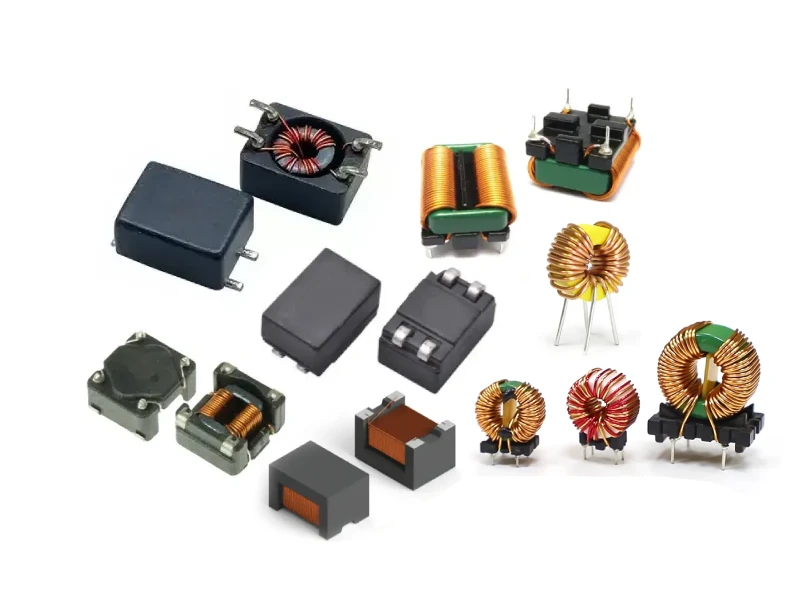
Why Must The Selection of Common Mode Chokes Be Prioritized in Home Appliance Design?
Electromagnetic Interference (EMI) is often dubbed the “invisible killer” of electronic products; statistics indicate that approximately 60% of performance malfunctions in home appliances are linked to this phenomenon.
Within home appliance circuitry, external disturbances originating from the power grid superimpose upon internal noise generated by power switches, collectively forming synchronous, in-phase common-mode interference signals. These signals not only disrupt wireless communication functions—such as Wi-Fi and Bluetooth—but can also cause product radiation levels to exceed regulatory limits, thereby preventing the product from passing mandatory national certification. In more severe instances, such interference may even trigger core chip crashes or data corruption, directly compromising the user experience and dealing a devastating blow to a brand’s reputation.
As a pivotal component within the EMC filtering stage, the common-mode choke acts as an “intelligent traffic cop” within the circuit: it allows normal differential-mode signals to pass through unimpeded while efficiently blocking the chaotic, synchronously flowing common-mode noise.
However, selecting the wrong choke can lead to more than just filtering failure; it may also result in increased signal loss, consume valuable PCB real estate, and even necessitate costly rework during the certification phase—ultimately delaying the product’s time-to-market. Consequently, mastering a scientific selection methodology and choosing the appropriate common-mode choke represents a critical step in elevating home appliance design from merely “meeting standards” to achieving “true excellence.”
The Four Core Principles of Common Mode Choke Selection: Precisely Matching Your Equipment Design Requirements
Many engineers focus solely on the nominal inductance value when selecting components; however, actual test results often prove unsatisfactory. In reality, the key to selecting a common-mode choke lies in evaluating four specific dimensions. By focusing on these critical factors, you can quickly identify the optimal solution best suited to your product.
1. Key Parameter Check: Start with impedance—it is effective only when it matches the noise frequency band.
The suppression capability of a common-mode choke is fundamentally determined by the frequency characteristics of its common-mode impedance—rather than simply by the magnitude of its inductance. Different home appliances generate noise across varying frequency bands, and consequently, they impose different requirements on impedance:
- For the input and output terminals of switching power supplies in refrigerators and washing machines, noise is primarily concentrated within the 1–30 MHz range. To attenuate conducted emissions by 15–20 dB—thereby meeting the requirements of international standards such as CISPR 32—the common-mode impedance must be no less than 500 Ω at 30 MHz.
- For interfaces such as the HDMI ports on smart TVs or the Wi-Fi communication modules in refrigerators, noise frequencies can reach levels of 100 MHz or even the GHz range. In these cases, it is essential to select a choke that maintains high impedance even at high frequencies; this ensures the effective suppression of radiated interference and guarantees error-free data transmission without packet loss.
When selecting a component, it is imperative to consult the impedance-frequency curve provided by the manufacturer: the specific noise frequencies you intend to suppress must fall within the inductive region—that is, prior to the choke’s resonant peak. If the operating frequency extends into the capacitive region, the choke will not only fail to suppress interference but may actually amplify the noise. Keep this simple rule of thumb in mind when making a selection: if the impedance within the target frequency band is at least three times greater than the characteristic impedance of the differential signal lines, you can expect to achieve effective noise suppression.
2. Ensure Ample Current Capacity Margin: Avoid Pitfalls Leading to Saturation Failure
The core component of a common-mode choke possesses a saturation threshold; when the operating current exceeds the saturation current, its inductance value drops sharply. This directly compromises the filtering effectiveness and may even lead to the complete failure of the component. Therefore, when selecting a component, it is imperative to ensure that an adequate safety margin is maintained.
- Saturation Current Requirement: The selected choke’s saturation current must be at least 1.5 times the device’s peak operating current. For demanding, high-current appliance applications (such as electric water heaters and variable-frequency air conditioners), a safety margin of 2 to 3 times the peak current should be reserved.
- Rated Current Requirement: Under continuous operation, the actual operating current should not exceed 80% of the choke’s rated current. If the ambient operating temperature exceeds 85°C, the rated value must be further derated—limited to within 70%—to prevent overheating and premature component aging.
- DC Resistance (DCR) Selection Preference: Priority should be given to models featuring lower DC Resistance (DCR). The lower the DCR, the lower the voltage drop and heat generation. For high-current appliance applications, prioritizing low-DCR models is particularly critical, as it helps to minimize energy consumption and suppress temperature rise.
3. Select Appropriate Core Materials Based on Frequency: Efficiency Stems from Application Matching
The frequency characteristics of different core materials vary significantly; selecting the appropriate material is crucial for balancing both performance and cost.
| Core Materials | Key Characteristics & Advantages | Applicable Appliance Scenarios |
| Manganese-Zinc Ferrite | High permeability, good low-frequency impedance, and low cost. | Low-frequency, high-current applications—such as the input and output stages of switching power supplies, as well as washing machine motor drives. |
| Nickel-Zinc Ferrite | Excellent high-frequency impedance, suitable for suppressing GHz-level noise. | High-frequency applications—such as the HDMI interfaces in smart TVs, Wi-Fi modules in refrigerators, and Bluetooth communication systems in smart door locks. |
| Nanocrystalline Alloy | High permeability, high saturation magnetic flux density, and good temperature stability. | Applications with extremely stringent reliability requirements—such as the motor drives in variable-frequency air conditioners, and vehicle charging stations (including residential fast-charging piles). |
Take, for instance, the currently popular ultra-slim wall-mounted washing machines: given their compact internal layout—coupled with the need to manage the high inrush currents generated during startup—small common-mode chokes made of manganese-zinc ferrite can be selected to achieve superior low-frequency filtering within a limited spatial envelope.
In contrast, consider smart projectors equipped with HD screen-mirroring capabilities—their HDMI interfaces require the filtering of common-mode noise exceeding 1 GHz. In this specific application scenario, utilizing surface-mount common-mode chokes fabricated from nickel-zinc ferrite ensures highly efficient high-frequency suppression within an extremely compact package size, without compromising the transmission quality of the high-definition signals.
4. Enclosure and Safety Compliance Design: Compliance Means Peace of Mind
In addition to electrical parameters, component selection must also take into account the device’s structural design and relevant safety regulatory requirements:
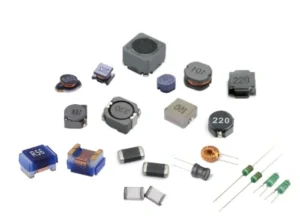
- Package Selection: For space-constrained products (such as small home appliances and smart door locks), priority should be given to Surface Mount Device (SMD) packages to conserve PCB real estate. Conversely, for high-current products (such as refrigerators and air conditioners), vertical or horizontal through-hole packages are generally preferred, as these packages offer superior heat dissipation performance and higher current-carrying capacity.
- Safety Regulatory Requirements: Common-mode chokes used in the power input stage must be safety-certified models holding valid UL or IEC certification. Their insulation withstand voltage capability must comply with specific design standards—typically requiring a minimum rating of 250V AC; however, in high-voltage operating environments, components with higher voltage ratings must be selected to ensure compliance with relevant 3C certification standards.
- High-Speed Signal Applications: In scenarios involving high-speed signals (such as USB and HDMI interfaces in smart TVs), models featuring low differential mode impedance characteristics should be selected. This measure aims to prevent signal edge degradation caused by excessive differential mode impedance, thereby avoiding issues such as “eye diagram” closure and data transmission errors.
Selection Recommendations for Various Home Appliance Scenarios—Simply Apply Them Directly!
We have compiled ready-to-use selection references tailored to common home appliance scenarios to help you shorten your design cycle:
- Inverter Air Conditioners / Air-Source Water Heaters
Application Requirements: Operation under high-current conditions, maintenance of stability across a wide temperature range, and compliance with EMC conducted emission standards.
- Selection Criteria: Prioritize the use of nanocrystalline or high-quality Mn-Zn ferrite cores; ensure a saturation current margin of 2x; verify that insulation withstand voltage capabilities meet high-voltage requirements; and select through-hole packaging to ensure effective heat dissipation. Test Results: By installing appropriate common-mode chokes, conducted emission levels were reduced by 15–20 dB, thereby successfully passing the initial certification testing.
- Smart TVs / Projectors
Application Requirements: Filtering for high-speed HDMI/USB interfaces, suppression of radiated interference, and compact packaging.
Selection Criteria: Selection of Nickel-Zinc (NiZn) ferrite cores with a common-mode impedance of ≥ 270Ω at 100 MHz; utilization of surface-mount packages featuring low differential-mode loss to ensure the integrity of high-definition signal transmission. Field Test Results: Following installation, radiated noise attenuation reached 12 dB; eye-diagram jitter was significantly reduced, and issues related to screen mirroring latency were virtually eliminated.
- Smart Refrigerators / Washing Machines
Application Requirements: EMI filtering for switching power supplies; suppression of power supply noise interference with Wi-Fi modules.
Selection Criteria: Selection of Manganese-Zinc (Mn-Zn) ferrite materials; ensuring impedance meets specifications within the 1–30 MHz frequency band; maintaining a current margin of 1.5 times the rated value; verifying full compliance with all safety regulations; and ensuring suitability for mass production requirements.
- Small Appliances / Smart Door Locks
Application Requirements: Compact size and low cost, requiring simultaneous filtering of both power lines and communication lines.
Selection Criteria: Utilize compact surface-mount common-mode chokes. Select appropriate Manganese-Zinc (Mn-Zn) or Nickel-Zinc (Ni-Zn) core materials based on specific noise frequencies to meet space-constrained layout requirements while ensuring cost-effectiveness.
Stay Ahead of Technical Trends: Select High-Quality Common Mode Chokes to Empower Home Appliances.
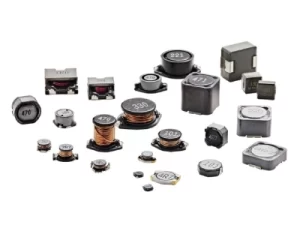
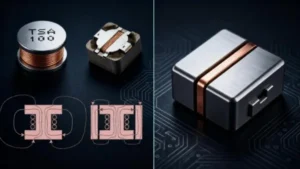
With the widespread adoption of smart home technologies, the requirements for common mode chokes in modern home appliances are constantly evolving: from early, bulky through-hole packages to more compact surface-mount packages; from single-material compositions to the application of specialized materials such as nanocrystalline alloys and high-performance ferrites; and even giving rise to integrated products that combine both common mode and differential mode filtering functions, helping you further conserve PCB space and reduce BOM costs.
Keeping pace with the latest industry technological trends, we offer a comprehensive range of high-quality common-mode choke products designed to cover a wide spectrum of application scenarios—whether for low-current circuits (1A) or high-current systems (20A), or for filtering low-frequency power supplies versus GHz-level high-frequency signals, we provide the appropriate solutions.
Our entire product line is fully safety-certified, capable of meeting the diverse design requirements of various home appliance products. Furthermore, based on your specific product parameters, we offer customized selection support services to help you quickly identify the optimal solution, shorten your R&D cycle, and ensure a smooth, first-pass success for your EMC certification.
If you are currently seeking a suitable common-mode choke solution for your next-generation home appliances or require expert technical assistance with component selection, please feel free to contact us at any time to request free samples and receive personalized selection recommendations. Let this “invisible guardian” safeguard the stable and reliable operation of your products.