In the design of electronic products, power inductors are core components, and their package types directly influence circuit performance and design flexibility. When selecting electronic components, the package type of a power inductor is often a critical factor in determining a project’s success or failure. However, given the vast array of package specifications available, how does one choose the type best suited to the project’s requirements? Today, we will delve into this topic and explore the key factors to consider when selecting the right power inductor package.
(★ If you want to know more information, you can refer to the following article: •Inductors are Used in High Frequency Circuits and Switching Power Supplies)
What is the Package of a Power Inductor?
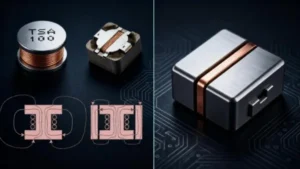
The packaging of a power inductor refers to the external protective materials and structural design of the device. Packaging serves not only an aesthetic purpose but also protects the internal inductor coil, thereby enhancing its interference resistance, heat dissipation, and mechanical strength. Different packaging types significantly influence the inductor’s performance and range of applications.
What Are Some Common Power Inductor Package Types?
Power inductor packaging types are mainly divided into four categories based on their application scenarios and performance characteristics: surface mount, through-hole, shielded, and unshielded.
1. Through-hole Packaging
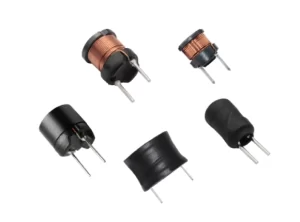
Through-hole inductors feature a leaded design, allowing them to be inserted directly into through-holes on a circuit board for soldering. The advantages of this packaging style include high mechanical strength, making it suitable for high-power applications and scenarios requiring high vibration resistance. However, due to their larger size and significant space requirements, their use in miniaturized designs is limited.
Overview: Available in both axial (e.g., color-coded inductors) and radial (vertical inductors) package styles; designed for through-hole mounting.
Advantages: Excellent heat dissipation performance, strong current carrying capacity, and high mechanical stability.
Applications: Power modules, industrial control equipment, and other scenarios requiring resilience in harsh environments.
2. Surface-Mount Packaging
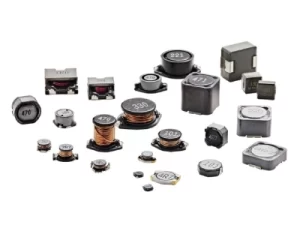
Surface-mount inductors are mounted onto the surface of a circuit board via flat solder pads. They offer the advantages of compact size and light weight, making them suitable for high-density circuit designs. This type of packaging is widely used in consumer electronics such as smartphones, tablets, and portable devices.
Overview: Named after imperial dimensions such as 0603, 0805, 1206 (e.g., 0603 corresponds to 0.06 inches long and 0.03 inches wide), suitable for surface mount technology, and compact in size.
Advantages: Lightweight, short leads (reducing parasitic capacitance), and superior high-frequency performance.
Applications: Compact electronic devices such as mobile phones and tablets.
3. Shielded Packaging
Molded inductors feature a structure in which the coil is directly embedded within the magnetic material. This packaging configuration offers advantages such as low magnetic leakage, excellent heat dissipation, and strong interference resistance, making it highly suitable for high-frequency, high-efficiency, and high-power-density applications.
Overview: Features an external magnetic shield; available in both Surface Mount (SMD) and Through-Hole (THT) types; effectively suppresses electromagnetic interference (EMI).
Advantages: Enhances circuit stability and reduces the impact of electromagnetic radiation.
Applications: Electromagnetically sensitive equipment, such as medical electronics and communication base stations.

4. Unshielded Packaging
In this type of packaging, the inductor coil is exposed, with simple structural protection applied only at critical points. While this packaging offers good heat dissipation, it has limited resistance to interference; therefore, it is suitable for applications with low requirements regarding electromagnetic interference.
Overview: Simple structure, no shielding cover, and low cost.
Advantages: Rapid heat dissipation and flexible sizing.
Disadvantages: Higher electromagnetic interference.
Applications: Low-frequency consumer electronics, such as standard home appliance circuits.

How to Choose the Right Power Inductor Package Type?
Power inductors are indispensable components in electronic devices, performing critical functions such as filtering, energy storage, and current regulation. Their package type not only affects product performance but also directly impacts the overall PCB layout and space utilization. Several key factors should be considered when selecting a package type:
1. Power Requirements and Current-Carrying Capacity:
Different types of power inductor packages support varying current ranges and power-handling capabilities. When designing high-power equipment (such as power modules or motor drivers), it is typically necessary to select packages with high saturation current and low resistance—such as toroidal inductors or large metal-alloy inductors. These packages offer not only superior performance but also excellent heat dissipation.
2. Space Constraints and Dimensional Requirements:
In modern electronic products, PCB space is often highly limited, making the selection of compact packages crucial. For portable devices or small consumer electronics, such as smartwatches or wireless headphones, surface-mount SMD inductor packages are clearly the ideal choice. SMD packaging features a small footprint and ease of machine mounting, facilitating efficient production.
3. Operating Frequency and Efficiency:
The operating frequency of a power inductor is a critical factor to consider when selecting the package type. For instance, high-frequency electronic devices typically require inductors with low losses and excellent high-frequency performance; therefore, multilayer ceramic packages are a preferred choice, as they effectively minimize eddy-current losses and ensure stable performance.
4. Encapsulation Materials and Application Scenarios:
Different encapsulation materials affect the electrical and thermal performance of power inductors. If the device is required to operate in harsh environments—such as outdoors or under high-temperature conditions—it is recommended to select encapsulation materials with oxidation-resistant properties, such as iron-silicon or iron-nickel alloys; these materials offer superior corrosion resistance and high-temperature stability.
In summary, selecting a power inductor package type requires considering the specific application scenario alongside the device’s comprehensive requirements regarding power, current, size, frequency, and environmental resilience. Before making a final decision, it is advisable to consult closely with suppliers and obtain samples for testing to ensure the chosen package type achieves the optimal balance between performance and cost.
Conclusion:
Different application requirements determine the choice of power inductor package. Balancing performance, cost, and size is key to selecting the right component during the design process. Have you encountered challenges in selecting power inductor packages during your project development? Please feel free to contact us via email at info@smdinductor.com.