If you are a hardware engineer, PCB designer, or component procurement manager working on AI servers, electric vehicle powertrains, or industrial power supply systems, you are well aware that the correct selection of inductors is critical to the success of the entire power distribution network (PDN). For decades, traditional SMD power inductors have been the standard choice for DC-DC conversion and filtering applications. However, molded power inductors—often referred to as “integrated” or “composite” inductors—are rapidly replacing traditional designs and dominating the landscape across virtually all high-performance applications. Driven by technological advancements, molded power inductors are becoming the preferred choice for electronics engineers, offering significant advantages over traditional SMD power inductors.
(★ If you want to know more information, you can refer to the following article: •2026 Inductor Industry: 3 Key Trends)

What is a molded power inductor?
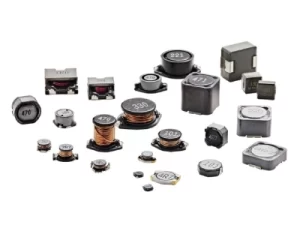
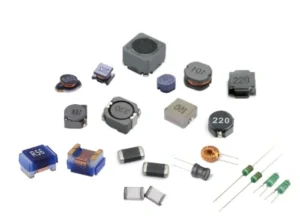
Molded power inductors are surface-mount components made by completely encapsulating precision-wound copper coils in high-density metal magnetic powder and then using a high-pressure die-casting process. Unlike traditional SMD inductors, which are assembled from pre-wound coils, independent ferrite cores, glue, and shielding components, the molding process creates a single, robust overall structure with a fully enclosed magnetic circuit.
This manufacturing technology was originally developed to meet the extreme power requirements of high-end CPU motherboards, and has now evolved into a core power component in the AI computing era. Currently, the power consumption of a single GPU has exceeded 1400W, and the next-generation platform is approaching 1800W. Industry forecasts indicate that the global molded power inductor market will maintain a compound annual growth rate (CAGR) of 20% to 40% over the next five years—a growth pace far exceeding that of traditional inductor categories.
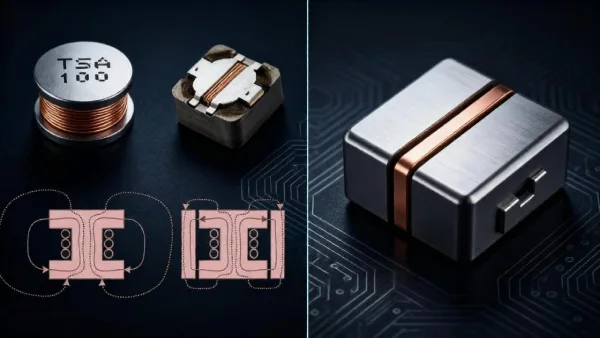
7 Significant Advantages of Molded Power Inductors Over Traditional SMD Inductors (Including Brand Case Studies and Test Data)
Molded power inductors are surface-mount components made by completely encapsulating precision-wound copper coils in high-density metal magnetic powder and then using a high-pressure die-casting process. Unlike traditional SMD inductors, which are assembled from pre-wound coils, independent ferrite cores, glue, and shielding components, the molding process creates a single, robust overall structure with a fully enclosed magnetic circuit.
This manufacturing technology was originally developed to meet the extreme power requirements of high-end CPU motherboards, and has now evolved into a core power component in the AI computing era. Currently, the power consumption of a single GPU has exceeded 1400W, and the next-generation platform is approaching 1800W. Industry forecasts indicate that the global molded power inductor market will maintain a compound annual growth rate (CAGR) of 20% to 40% over the next five years—a growth pace far exceeding that of traditional inductor categories.
1. Soft saturation characteristics ensure superior current stability
Traditional SMD inductors using ferrite cores suffer from a “hard saturation” flaw: once the current exceeds a specific threshold, inductance drops precipitously, directly leading to unexpected system crashes. In contrast, molded power inductors (utilizing distributed air gaps embedded within a metal powder matrix) exhibit smooth, soft saturation characteristics. Inductance declines gradually as current increases, avoiding sudden, cliff-like drops.
Real-world examples and comparative data
We compared two 1µH inductors, both measuring 12×12mm:
• Molded inductor: Coilcraft XGL1210-102M; maintains 70% of its nominal inductance even at 30A, with no sudden parameter drop-off.
• Traditional SMD inductor: A ferrite-shielded inductor from a leading brand; inductance drops to 50% of the nominal value at 18A and falls below 30% at 22A.
In actual AI server GPU power delivery circuits, this means molded inductors can operate stably at 120%–150% of their rated current without sudden performance failure. Conversely, traditional SMD inductors often experience significant inductance attenuation and system instability as soon as the current exceeds 110% of the rated value. It is precisely because of this soft saturation characteristic that NVIDIA’s next-generation GB200 and Rubin platforms have specified molded TLVR (Transient Low Voltage Regulator) inductors—supplied by companies such as Vishay and TDK—as core power delivery components.
2. Ultra-low DC resistance delivers industry-leading energy efficiency
Every additional milliohm of DC resistance in an inductor generates unnecessary heat and wastes electrical energy. Molded power inductors feature optimized flat copper wire windings tightly encapsulated within a magnetic powder compound. For a given inductance value and physical size, their DC resistance is 30%–50% lower than that of conventional SMD inductors; by reducing I²R losses, they directly improve the system’s overall energy efficiency.
Real-world examples and comparative data
Comparing two inductors with dimensions of 5.5 × 5.5 mm and an inductance of 0.47 µH:
• Molded type: Coilmaster SEP0503E-R47M-LF; features a maximum DC resistance of just 16 mΩ and supports a rated current of 8.2 A within a slim 3 mm profile.
• Conventional SMD type: A ferrite-shielded inductor of the same specifications has a maximum DC resistance of 32 mΩ and a rated current limit of only 5 A.
In a 1000 W server power supply, replacing conventional inductors with molded inductors can reduce total power consumption by 5–10 W. For data center clusters comprising tens of thousands of units (such as those operated by Meta), this translates to annual energy savings of hundreds of megawatt-hours, significantly lowering PUE (Power Usage Effectiveness) and operating costs. In BYD vehicles built on the 800V e-Platform 3.0, this efficiency gain—achieved by reducing heat losses in the On-Board Charger (OBC) and DC-DC converter—directly extended the CLTC driving range by 3%.
3. Superior thermal management capabilities support continuous 24/7 operation
The assembly structure of traditional SMD inductors often leads to heat accumulation and the formation of localized hot spots, thereby accelerating material aging. In contrast, molded power inductors are formed from highly thermally conductive metal powder; the inductor body itself acts as a natural heat sink, enabling more efficient heat dissipation. Independent tests show that at a continuous current of 20A, molded inductors operate at temperatures 12–18°C lower than traditional SMD inductors of the same size.
Real-world brand examples and comparative data
Vishay’s IHLP series of molded inductors underwent thermal performance comparison testing against traditional SMD inductors in power modules for Intel 130W Xeon CPUs:
• Under a full load of 25A, the surface temperature of the Vishay IHLP6767GZ inductor was 72°C.
• Under identical operating conditions, a traditional SMD inductor with the same inductance value and dimensions reached a surface temperature of 89°C.
This superior thermal performance is critical for applications requiring uninterrupted operation, such as Huawei 5G base stations, Siemens industrial motor drives, and AWS AI servers. Molded inductors maintain stable performance even at an ambient temperature of 85°C, effectively eliminating the risk of thermal runaway—a common issue for traditional inductors under sustained high loads.
4. Near-zero EMI leakage; easily passes compliance testing
Conventional semi-shielded SMD inductors exhibit significant magnetic flux leakage, which can interfere with nearby high-speed signal traces, high-precision ADC circuits, or RF modules. Engineers often have to resort to measures such as adding external shields, rerouting PCB traces, or shortening trace lengths to pass EMI compliance tests; these steps not only extend project timelines by weeks but also increase the Bill of Materials (BOM) cost.
Real-world case study and comparative data
In a comparative test of radiated EMI at 100 MHz (measured at a distance of 1 cm), TDK’s SPM series molded power inductors were compared against conventional semi-shielded SMD inductors:
• The radiated stray magnetic field of the molded inductors was only 8 dBµV.
• Under the same test conditions, the radiation level of conventional semi-shielded SMD inductors reached as high as 26 dBµV.
This significant reduction in magnetic radiation enabled a leading European automotive Tier-1 supplier to reduce the number of CISPR 25 EMI test cycles from three to one, thereby saving six weeks of project time. In Tesla’s HW4.0 autonomous driving system, this low-radiation characteristic is a strict requirement designed to prevent signal interference between 5-megapixel (5MP) cameras, millimeter-wave radar, and the vehicle’s processing unit.
5. No audible buzzing noise; ideal for noise-sensitive applications
One of the most common and troublesome issues with traditional SMD inductors is audible buzzing noise: Under light-load conditions or during dynamic fluctuations in switching frequency, the magnetostriction effect of the ferrite core and loose coil windings can generate harsh, high-frequency noise—noise that is perceptible to users in devices such as servers, laptops, and automotive infotainment systems.
Real-world brand case study and comparative data
Bourns’ SRP series molded inductors were tested against traditional SMD inductors for noise levels, using conditions of a 20% light load superimposed with a 1 kHz current ripple:
• The noise level of the molded inductors was 23 dB(A), which is below the human auditory threshold.
• The noise level of traditional SMD inductors was 41 dB(A), producing a clearly audible high-frequency buzz.
Dell switched entirely to Bourns molded inductors for its latest Latitude business laptop series, completely resolving user complaints regarding “coil whine” issues found in previous generations. These products are also ideally suited for applications such as office servers, GE Healthcare patient monitoring equipment, and the interior systems of high-end Mercedes-Benz S-Class sedans—environments where any perceptible noise would be considered a serious product defect.
6. Superior mechanical stability for demanding operating environments
Traditional SMD inductors rely on adhesives to secure the core, clips to hold the coil, and spot welding for terminal connections; under severe vibration or mechanical shock, these discrete components are prone to loosening, leading to parameter drift, open circuits, or even total failure. In contrast, molded power inductors feature a monolithic, solid structure: the coil, magnetic powder, and terminals are fused into a single unit during the molding process.
Real-world examples and comparative data
Comparison of AEC-Q200 vibration test results between Kemet molded power inductors and traditional SMD inductors:
• Molded inductors: Passed the 20G (10–2000 Hz) sinusoidal vibration test with zero parameter drift after 8 hours of testing.
• Traditional SMD inductors: 12% of the test samples exhibited inductance value drift exceeding 10%, and 3% experienced internal coil detachment.
Currently, almost all automotive-grade (AEC-Q200 Grade 0) power inductors utilize a molded design; they operate stably across a temperature range of -55°C to 155°C and withstand continuous road vibration throughout a vehicle’s 15-year lifespan. Bosch has adopted these Kemet molded inductors for use in the high-pressure fuel injection systems of its gasoline and diesel engines.
7. 40% smaller size for higher power density
Modern electronic design teams are constantly challenged by the limited space available on PCBs. Molded power inductors can store more energy within a smaller footprint; for the same inductance and rated current, they occupy 30% to 40% less board space compared to traditional SMD inductors. This space-saving capability is crucial for applications where space is at a premium, such as thin-and-light laptops, power management circuits in compact smartphones, and high-density server motherboards.
Real-World Examples and Comparative Data
Size comparison of two inductors with a rated current of 15A and an inductance of 1µH:
• Molded type: Würth Elektronik WE-MAPI series; dimensions 7×7mm, height 4mm.
• Traditional SMD type: Comparable performance; dimensions 10×10mm, height 5mm.
The molded inductor reduces PCB footprint by 51% and volume by 64%. In Supermicro’s latest 2U AI server motherboard, this compact design enables engineers to place inductors on the back of the GPU PCB, thereby realizing an innovative Vertical Power Delivery (VPD) architecture. This architecture reduces power delivery loop impedance by 40%, meeting the rigorous low-voltage, high-current power requirements of next-generation GPUs such as the H100 and GB200.
Scenarios where traditional SMD inductors are still applicable
Molded power inductors are not the optimal choice for all scenarios. For cost-sensitive consumer products involving low currents—such as entry-level mobile phone chargers, small home appliances, and basic signal filtering circuits operating below 3A—traditional SMD inductors can meet performance requirements while reducing Bill of Materials (BOM) costs by 20% to 30%. In such low-stress applications, the full performance advantages of molded inductors often cannot be fully realized.
Key Takeaways: Inductors Power Next-Generation Electronic Devices
From artificial intelligence (AI) data centers and 800V electric vehicles to 5G infrastructure and aerospace systems, molded power inductors from leading brands such as Coilcraft, TDK, Vishay, Bourns, Kemet, Würth Elektronik, and Coilmaster have set new industry benchmarks for high-performance power supply design. With features including soft saturation characteristics, ultra-low DC resistance, superior thermal management, low EMI (electromagnetic interference), silent operation, exceptional durability, and compact footprints, these inductors effectively address virtually all the core challenges engineers have faced for decades when using traditional SMD inductors.
As global demand for higher power density and greater energy efficiency continues to rise, molded power inductors have evolved from a mere option for performance enhancement into indispensable, critical components for any competitive modern electronic product.