
In modern electronic design, choosing the right power inductor is a key step in creating high-performance circuits. Any negligence can cause unstable circuit performance, lower energy efficiency, and even overheating or damage to components. However, facing the wide variety of models on the market, how to accurately choose the right power inductor has always been a hot topic among engineers. So, how to equip high-performance circuits with the best power inductor? This article will conduct a detailed analysis to help you find the best solution. (★ If you want to know more information, you can refer to the following article: •Why Choose SMD Magnetic Power Inductors?)
What is a power inductor and why is it so important?
Power inductors are important components for energy storage in circuits and play a core role in power management, filtering and voltage regulation. Especially in high-frequency and high-efficiency scenarios, the parameter selection of the inductor directly determines the working performance of the circuit. A poorly performing inductor will not only increase power loss, but may also cause electromagnetic interference (EMI) problems. Therefore, the reasonable selection of power inductors is the basis for ensuring circuit performance.
How to choose a suitable power inductor?
1. Determine the inductance value (L value) according to the circuit requirements
First, calculate the required inductance value according to the circuit design requirements. An excessively large inductance value can lead to slower response speed, while an excessively small inductance value may hinder achieving a stable target output. Formula calculation and simulation are important means to determine the L value.
2. Rated current and saturation current
Ensure that the rated current of the power inductor can meet the maximum current demand of the circuit, and check its saturation current (Isat) to avoid core saturation problems under high current.
3. Choose the right material and operating frequency
Different inductor materials (such as ferrite and metal powder core) perform differently at high frequencies. Ferrites generally have lower power losses, while metal powder cores are more suitable for high current applications due to their higher saturation flux density. In high-frequency switching power supply design, it is preferred to choose inductors that support high-frequency operation.
4. Understand DC resistance (DCR) and efficiency
DCR is the DC resistance value of a power inductor, which is directly related to the power loss of the inductor. Selecting an inductor with low DCR can effectively reduce heat generation, thereby improving the efficiency of the entire system.
5. Consider size and heat dissipation
High-performance circuits often require a compact layout, so it is particularly important to select the right size inductor while ensuring performance. In addition, the heat dissipation capacity of the inductor must also be considered to avoid instability caused by overheating.
Practical Case Sharing
Take the synchronous buck converter as an example. The requirements for the power inductor of this circuit include:
– Inductance value range: 5μH to 20μH.
– Rated current must meet 1.5 times the peak current.
– DC resistance (DCR) is limited to less than 50 milliohms to reduce power loss.
After analysis, the shielded power inductor of the Zhenhua brand performed well in this case. (★ If you want to know more information, you can refer to the following article: •Inductors are Used in High Frequency Circuits and Switching Power Supplies)
Notes on Selecting Power Inductors
1. Parameter selection
The parameters of power inductors include inductance, current, resistance, frequency, etc. When selecting, it is important to choose parameters reasonably based on the circuit design requirements. Generally speaking, the inductance of the power inductor should be slightly larger than the design requirements, the current should be slightly larger than the maximum operating current, the resistance should be smaller than the loss allowed by the design, and the frequency should be within the operating frequency range.
2. Working environment
The working environment of the power inductor also needs to be considered, such as working temperature, humidity, vibration and other factors. It is necessary to select a power inductor that meets the requirements according to the circuit application environment. Generally speaking, the working temperature of the power inductor should be lower than its maximum allowable temperature, the humidity should meet the environmental requirements, and the vibration should be less than its maximum allowable vibration.
3. Package form
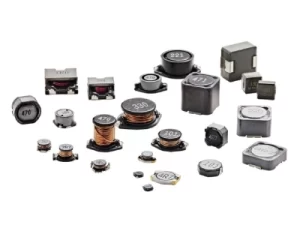
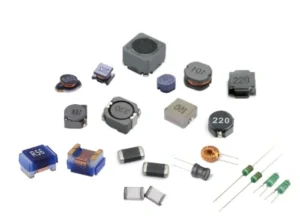
The package form of power inductors varied, such as surface mount, plug-in, SMD, etc. Different package forms are suitable for different circuit layouts and application environments, so it is necessary to select the appropriate package form according to the specific situation. Generally speaking, surface mount power inductors are suitable for circuits with high-density layouts, plug-in power inductors are suitable for high-power circuits, and SMD power inductors are suitable for small circuits.
4. Other considerations
When selecting a power inductor, you should also pay attention to the following points:
a. The quality factor of the inductor should be high to ensure the stability and reliability of the circuit performance.
b. The Q value of the inductor should meet the design requirements; otherwise, it will affect the circuit performance.
c. The self-resonant frequency of the inductor should be higher than the circuit frequency to avoid self-resonance.
d. The loss of the inductor should be less than the design requirements; otherwise, it will lead to reduced circuit efficiency.
In short, the correct selection of power inductors is the key to ensuring stable circuit performance and reliable operation. When selecting, factors such as inductor parameters, working environment, and packaging form need to be considered to ensure that the selected power inductor meets the circuit design requirements.
Selecting a power inductor for a high-performance circuit is not a simple pursuit of maximizing indicators, but the result of a multi-factor trade-off. The choice of power inductors not only affects the performance of the circuit but may also affect the overall life of the product. From materials, frequency adaptability to current capacity and efficiency performance, each parameter must match the actual circuit requirements. During the design process, it is recommended to use the more authoritative selection tools and simulation software in the industry to quickly lock in the optimal solution.
Have you been troubled by the choice of power inductors recently? Or do you have any tips you are willing to share? Welcome to communicate in the comment area, let’s discuss together!