
Inductors play a vital role in the design of modern electronic devices. Whether used for filtering, energy storage, or power management, the choice of inductor directly affects the performance of the circuit. However, when it comes to SMD inductors and power inductors, many engineers may be confused: what is the main difference between them? This article will analyze this issue in depth and answer your questions. (★ If you want to know more information, you can refer to the following article: •Why Choose SMD Magnetic Power Inductors?)
What is an SMD inductor?
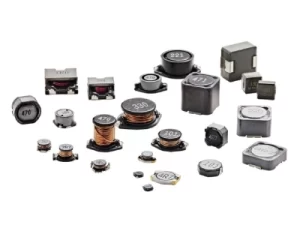
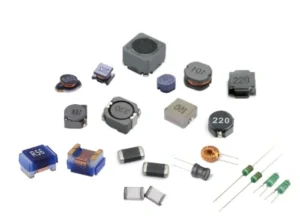
An SMD inductor, also known as a surface mount inductor, is an inductor suitable for surface mount technology. SMD inductors are widely used in consumer electronic devices such as smartphones and wearable devices due to their small size, good high-frequency characteristics, and easy installation. Since SMD inductors are mainly used in low-power devices, they are usually small in size and have a flexible inductance range, which can meet the high-frequency requirements in signal processing.
What are power inductors?
Power inductors focus on handling high current and high power. They are widely used in power modules, DC-DC converters, and industrial electronic devices and are usually able to handle higher current loads. Compared to SMD inductors, power inductors are larger and more robust, usually with coil winding and ferrite cores for higher energy storage capabilities.
The main differences between SMD inductors and power inductors
Power inductors focus on handling high current and high power. They are widely used in power modules, DC-DC converters, and industrial electronic devices and are usually able to handle higher current loads. Compared to SMD inductors, power inductors are larger and more robust, usually with coil winding and ferrite cores for higher energy storage capabilities.
The main differences between SMD inductors and power inductors
1. Different usage scenarios: SMD inductors (surface mount inductors) are inductors designed for surface mount technology (SMT). They are small in size and light in weight, and are widely used in small electronic devices such as mobile phones and tablets. Power inductors focus more on handling larger currents, so they are mainly used in scenarios that require high power transmission, such as power modules and automotive electronics. Therefore, SMD inductors are mainly used in small portable devices and signal processing, while power inductors are used in power processing and industrial applications.
2. Current carrying capacity: Power inductors are capable of carrying larger currents, while SMD inductors are more suitable for low-power applications.
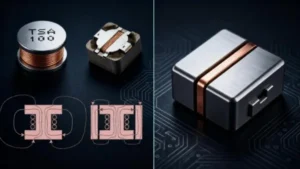
3. Volume and structure: SMD inductors usually use ceramic or ferrite materials, focusing on miniaturization and high-frequency performance; while power inductors often use magnetic core coil design, focusing on heat dissipation performance and energy load capacity, with larger volume but stronger structure. Therefore, from the appearance, SMD inductors are usually more compact, while power inductors appear more “heavy”.
4. Performance parameters: When engineers select inductors, they usually focus on parameters such as inductance value, current carrying capacity and frequency characteristics. Chip inductors generally perform well in high-frequency applications, featuring small inductance values and low losses. In contrast, power inductors emphasize stable current performance and higher current capacity, making them more suitable for low-frequency applications.
How to choose the right inductor?
When designing electronic circuits, choosing an inductor requires a trade-off based on the specific application scenario. If your device requires high-frequency filtering and limited space, SMD inductors are the best choice; if you need to handle high power and high current, power inductors will be a more reliable choice.
Conclusion and interaction
Whether it is a SMD inductor or a power inductor, each has its own unique advantages, and the right choice will directly affect the success of the project. Have you used these two inductors in your project? Welcome to share your experience and insights in the comment area, or ask us your questions, we will be happy to answer them for you.

In the competitive electronic component market, Zhenhua’s SMD power inductors stand out with their high performance, reliability and global support network. If you are looking for reliable inductor solutions, please consider Zhenhua to take your design project to the next level. Choosing Zhenhua inductors is no longer a problem. Just contact us for samples: info@smdinductor.com.
Take action now! Visit Zhenhua’s official website to explore more product specifications and application cases. You will find that choosing Zhenhua is an investment you will never regret. Zhenhua helps you succeed!